
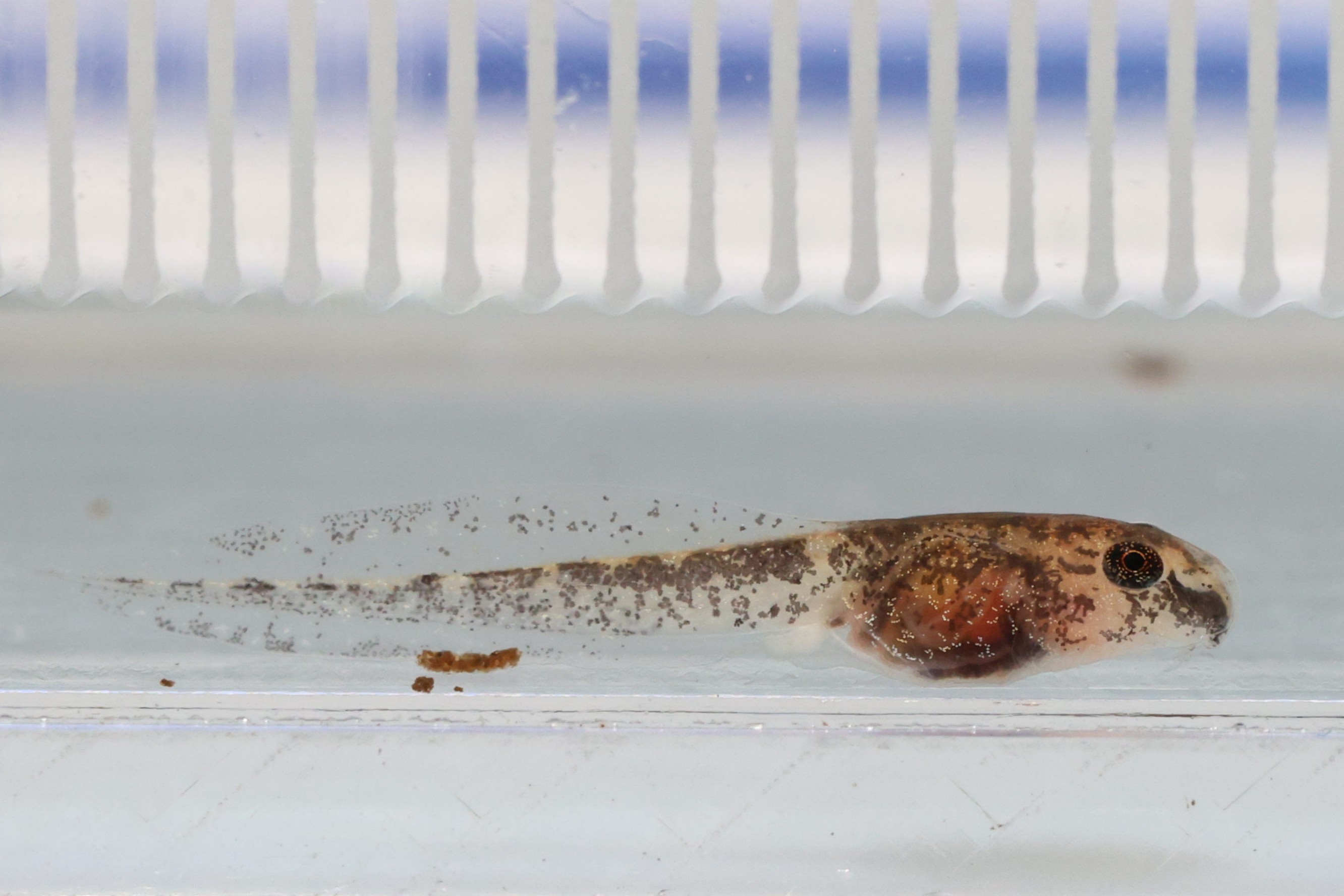
/Conservationists Celebrate Milestone in Saving Afia Birago’s Puddle Frog
– Fifteen Afia Birago’s puddle frogs born at London Zoo mark a world-first under human care.
– The breeding program is part of an urgent effort to protect one of the rarest amphibians from extinction.
– The collaboration involves Herp Conservation Ghana and the CSIR-Forestry Research Institute.
– Increased knowledge from the breeding program aims to establish sustainable populations in Ghana.
– Visitors can witness this conservation effort firsthand at London Zoo’s Secret Life of Reptiles and Amphibians exhibit.
In a significant breakthrough in amphibian conservation, 15 Afia Birago’s puddle frogs have been born at London Zoo, hailing as the first of their species to be bred under human care globally. This achievement underscores the urgent conservation efforts led by ZSL (Zoological Society of London) in partnership with Ghanaian organizations, aimed at saving one of the world’s rarest and smallest frogs from the brink of extinction.
The diminutive froglets, measuring no larger than the tip of a pencil, are a part of a crucial initiative following the transfer of 20 adult frogs from Ghana last year. ZSL Curator of Reptiles and Amphibians Ben Tapley remarked, “These 15 frogs are the first Afia Birago’s puddle frogs born as part of our emergency conservation programme for the species. They may be tiny enough to sit on your fingertip, but their arrival represents a huge step forward for an amphibian facing an uncertain future.”
Discovered as a new species in just 2018, Afia Birago’s puddle frog (Phrynobatrachus afiabirago) is known to exist solely in two perennial pools within Ghana’s Atewa Hills Forest Reserve, where its habitat faces severe threats from mining activities. This imminent risk prompted the formation of an action plan in September 2025, resulting in the gradual relocation of these critically endangered frogs to London Zoo.
Unnar Aevarsson, ZSL Amphibian Keeper, stated, “When the adult frogs arrived in London last year, almost nothing was known about them. Using our extensive experience caring for amphibians, our team have since learned so much more about these incredible frogs – developing the knowledge, techniques and breeding protocols needed to give them the best chance of survival.”
The 5mm-long froglets symbolize a victory in the fight to secure the future of their kind, yet the journey has only just begun. Efforts are now focused on establishing sustainable populations in Ghana to support recovery initiatives in their natural habitat. This includes the establishment of a conservation breeding facility in Kumasi, the first of its kind dedicated to amphibian conservation in West Africa.
Collaboration remains pivotal. ZSL is sharing insights from the breeding program with its Ghanaian counterparts at the CSIR-Forestry Research Institute in Kumasi, enhancing local efforts toward population sustainability. Meanwhile, ZSL EDGE Fellow Anthony Churcher, affiliated with Herp Conservation Ghana, is exploring possible habitats on private land surrounding the Atewa Hills Forest Reserve for future frog releases.
Ghanaian conservationist and ZSL EDGE Regional Project Manager Caleb Ofori-Boateng noted, “I named this frog after my mother so that her legacy would live on. Thanks to this breeding programme, it will. Her name will be linked to a species we saved, not one we lost.”
Dr. Kwame Antwi Oduro, Director of the CSIR-Forestry Research Institute of Ghana, emphasized the importance of this collaboration for the conservation of Ghana’s forests: “This collaboration with ZSL shows what science and partnership can achieve together, and it is building the skills and facilities Ghana needs to safeguard its own threatened wildlife.”
Visitors to London Zoo can witness the conservation program firsthand in the Secret Life of Reptiles and Amphibians exhibit, where these remarkable frogs are cared for by the zoo’s specialized amphibian team. Unnar added, “The global amphibian crisis means collaborative conservation work like this is crucial. These frogs are in themselves extraordinary animals, but they are also a reminder of how much wildlife we still stand to lose.”
The success of the Afia Birago’s puddle frogs not only captivates zoo visitors but also highlights the critical role each individual plays in conservation efforts worldwide.