/Art is Freedom Exhibition to Shine Light on Modern Slavery Survivors
– Hestia’s Art is Freedom exhibition will be showcased across various iconic London locations.
– The exhibition features artwork by survivors of modern slavery, emphasizing their strength and resilience.
– It includes a special display at Piccadilly Lights on Anti-Slavery Day, 18 October.
– The event aims to raise awareness and encourage support for survivors reclaiming their identities.
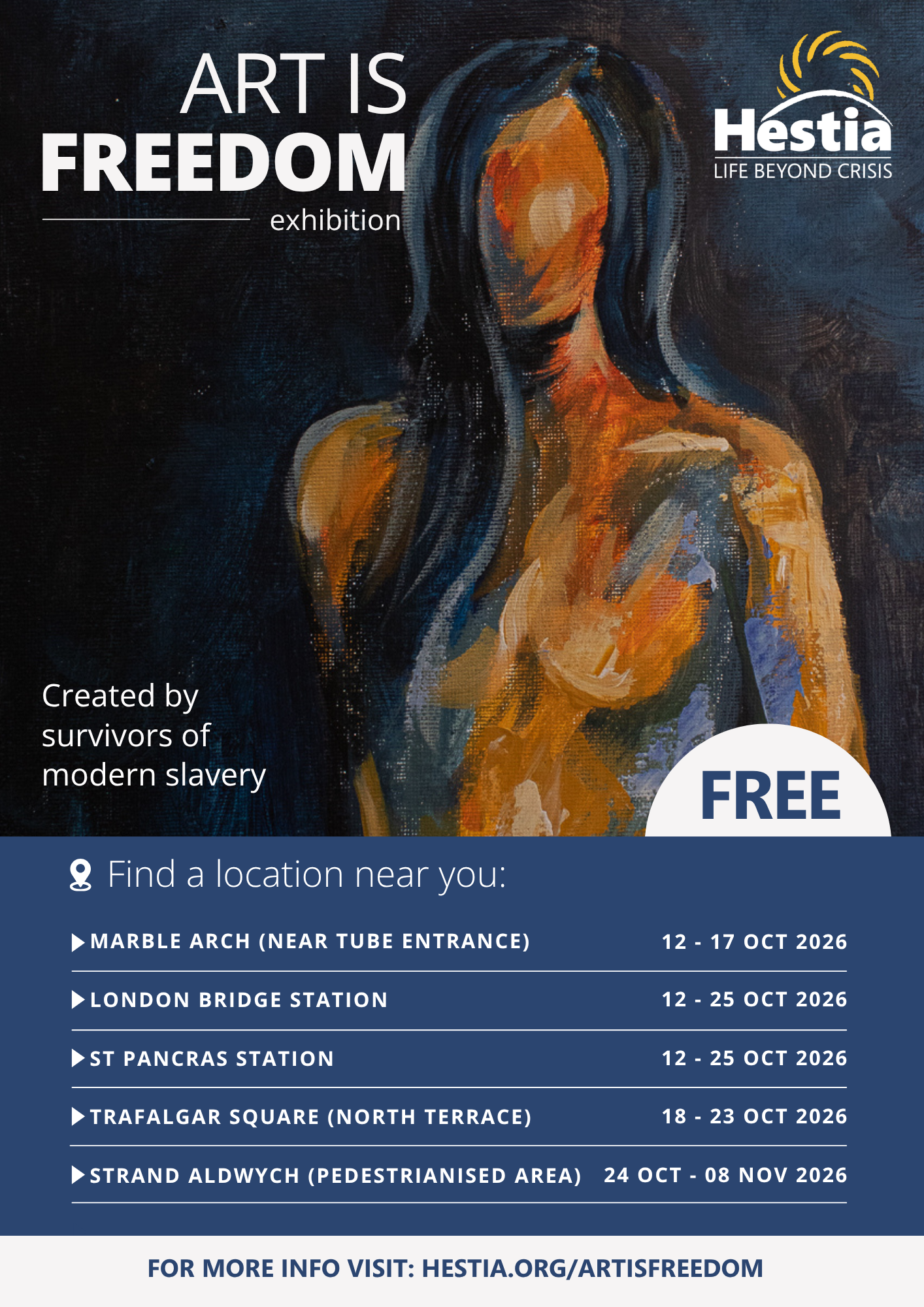
This October, Hestia’s annual Art is Freedom exhibition will bring powerful visuals created by survivors of modern slavery to the forefront at prominent locations throughout central London. The exhibition aims to draw public attention to the urgent issue of modern slavery and the ongoing fight for the recognition and support of its survivors.
Kicking off at Marble Arch on 12 October, this free exhibition will run until 8 November, with displays scheduled at Trafalgar Square, London Bridge Station, St Pancras International, and The Strand/Aldwych. Notably, on 18 October, coinciding with Anti-Slavery Day, select artists’ works will light up the renowned Piccadilly Lights for a special ten-minute showcase.
Art is Freedom is more than just an art exhibit; it represents a series of workshops led by artists that provide survivors a supportive environment and resources to explore their creativity. The initiative is carried out with contributions from Ashurst Perkins Coie and We Soda, with workshops facilitated by Create, EPIC Arts, Gawain Hewitt, and MN.
Hestia is dedicated to aiding individuals who have faced crises and trauma, including those who have survived modern slavery—a crime characterized by the exploitation of individuals for personal or commercial benefit through coercion, deception, or abuse. In 2025, authorities identified 16,362 adults as potential victims of modern slavery. Unfortunately, the hidden nature of this crime, compounded by psychological manipulation from traffickers and a lack of documentation, can severely hinder victims’ access to critical support services.
This year’s exhibition theme, “This is me,” was selected by the survivor-artists and invites them to express and celebrate their identities beyond their experiences with modern slavery. Curated by a panel of survivors alongside the Independent Anti-Slavery Commissioner, Eleanor Lyons, the exhibition not only highlights the persistent reality of modern slavery in the UK but also showcases the remarkable strength, resilience, and artistry of those affected.
Survivor-artist JR, who was trafficked as a child, reflected on his journey: “When I was four years old, I was trafficked and sent abroad. When I was around five, I tried to draw something, but I was bullied and stopped. Although I still loved art, for 50 years it held both grief and passion for me. When I arrived at the Art is Freedom workshops, I felt welcomed and safe. The theme ‘This is me’ allowed me to focus on myself and find my own identity through the images I was creating. Art is Freedom showed me that there were still things I could do. It not only gave me hope and made me feel powerful; it helped me come out of the darkness. I felt freedom, liberation and rebirth.”
Another participant, LV, emphasized the importance of the safe space Art is Freedom provided: “With trauma, you end up with a lot of self-worth issues. I struggle with having an identity and understanding who I am. But I ended up deciding that I could find those things in what I love and what’s around me. Like flowers, for example, and nature and the sky. I’m really proud of the work I created, which usually is something that I would struggle with. With everything else in my life being stressful, it was a little bubble I could go into, and not have to worry about things.”
Patrick Ryan, Chief Executive of Hestia, stated: “Modern slavery is a terrible crime, but a person’s experience of it should never be allowed to define them. Art is Freedom gives survivors the space to express who they are and shows the role creativity can play in rebuilding confidence, hope and identity after trauma.”
He added, “These works will be seen by thousands of people across the capital, from Trafalgar Square to the Piccadilly Lights on Anti-Slavery Day. We hope Londoners will pause, and take the time to consider the people and stories behind the artwork. Ending modern slavery requires action from all of us. By visiting and sharing Art is Freedom, Londoners can amplify survivors’ voices, raise awareness of the fact modern slavery is taking places on our doorstep, and play their own part in ending it.”
For more information on the exhibition and the inspiring stories of its artists, visit the Art is Freedom exhibition page.